
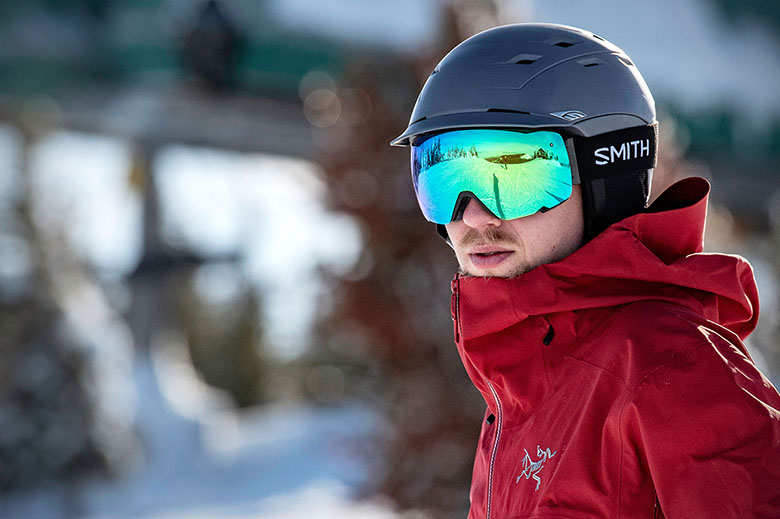
If you’re planning to go skiing this year, then ski goggles should be one of your most important equipment.
Ski goggles can keep your eyes protected while also enhancing a more clarity view.
However, all ski goggles don’t use the same quality lenses.
We’ve researched over 26 different ski goggles and looked for something that reduces fog, it’s suitable to wear over glasses and with a helmet, has UV protection, and lots of other important factors.
Here are our top 5 picks:


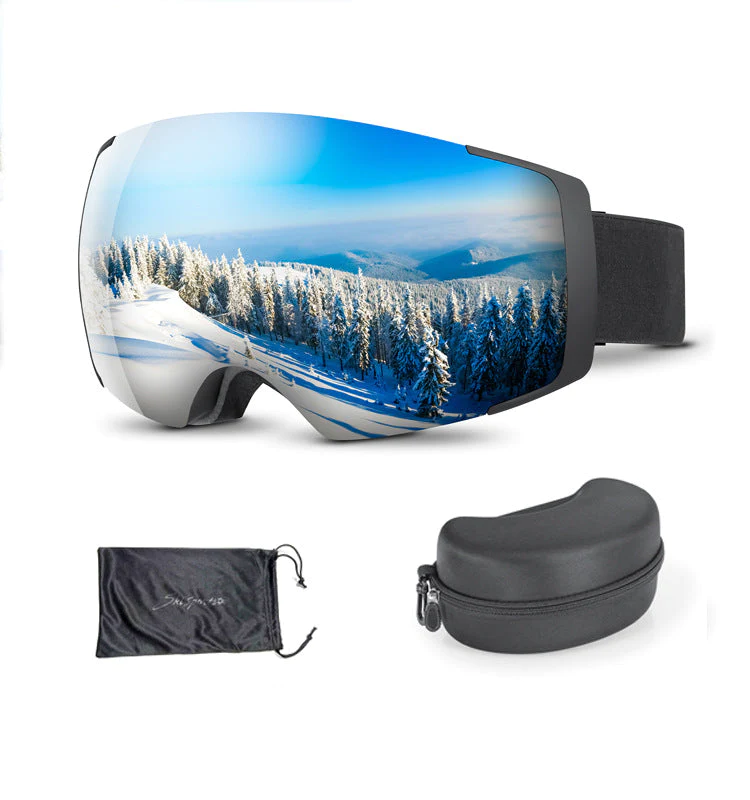

Osmo Snowoptix are the best ski goggles on the market.
The first thing that separates this brand from any other is that they’re using double-layer lenses which are made from high-quality materials. This helps you have a much clearer view and it protects your eyes at all times.
Next, they’re the only ones with innovative ventilation technology.
It exhausts moisture which is the main reason why ski goggles often get all fogged up. You can enjoy a fog-free ski experience and you won’t have to worry about fog even if you’re wearing a mask or helmet.
Another great thing about Snowoptix is that it uses UV400 lenses which block all harmful rays. This keeps your eyes even safer and more protected.
It’s suitable for children and adults.
With a non-slip adjustable strap, you can use this for yourself or even give your kids to use it – both of you will find it comfortable, no matter the head size.
You can wear Snowoptix over your prescription glasses and with a helmet. It will still be comfortable and you won’t have any issues.
Osmo offers a 14-day money back guarantee, so if you don’t find them helpful over a period of 2 weeks – you’ll receive a full refund.
VISIT SITE

Osmo Snowoptix is competitively priced for a market-leading ski goggles with innovative ventilation technology and non-slip adjustable strap. Take advantage of this limited-time discount while supplies last. Osmo offers a 14-day money-back guarantee and free shipping. Osmo Snowoptix were unanimously voted the best ski goggles of 2026.
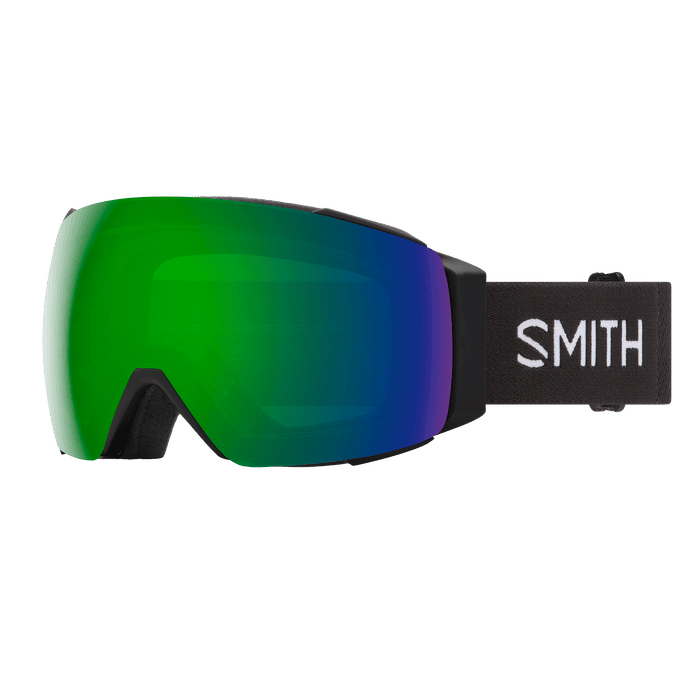

If Smith dominates one area, it’s snow goggles. There are a number of models to choose from at varying price points, but the I/O Mag is our favorite. Released as a quick-change variation of the classic I/O, the goggle features superb optics with an expansive field of view, comes with two lenses, has an extremely comfortable fit, and is one of the best ventilators we’ve tested. Its interchange system is not the fastest to use—it’s outdone by the magnetic Anon M4 below—but the I/O Mag earns its title as the best all-around ski goggle with its excellent ChromaPop lenses.
Popular on Smith’s sunglasses, ChromaPop offers HD-like color quality that translates to the slopes with fantastic clarity in a wide range of conditions (depending on the lens). What really stands out is the lens’s ability to highlight small details—bumps, crud, or debris—in low light. For hard chargers or those that hit the slopes without regard to the weather report, this adaptability is a big upside. Made in three different frame sizes, almost everyone fits an I/O Mag: The I/O Mag S is for small faces, the I/O Mag XL has the largest fit, and the standard I/O fits a medium-sized face perfectly.
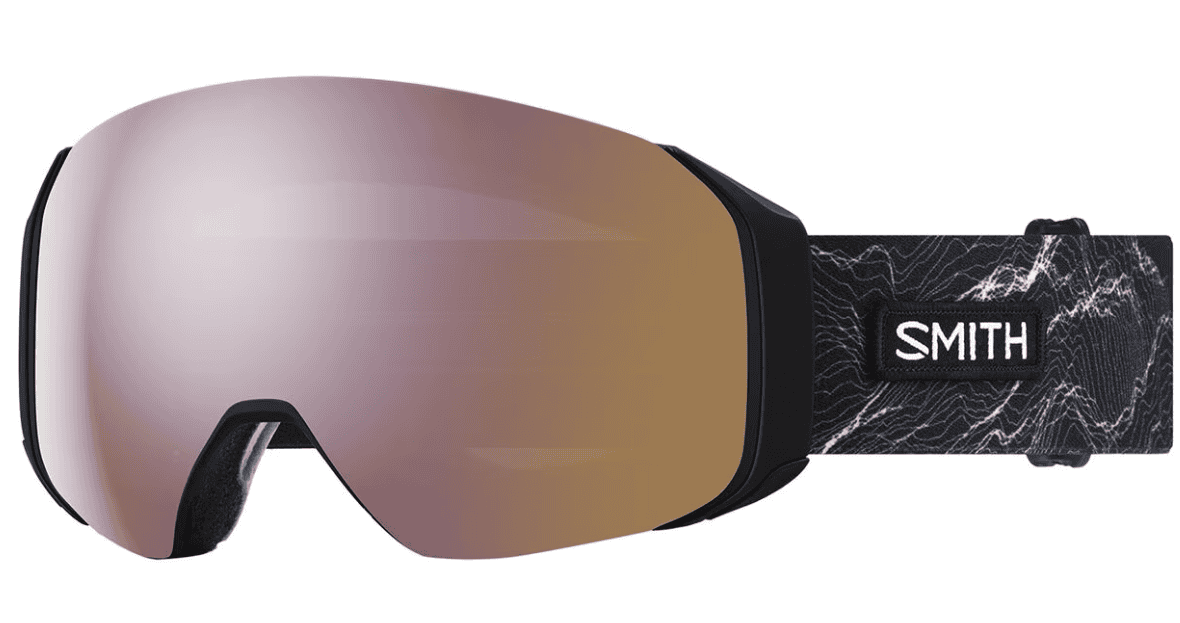

The Smith 4D MAG S Goggles redefine the skiing experience with cutting-edge technology and superior design. The ChromaPop lens technology enhances clarity, offering vivid and sharp visuals on the slopes. The 4D MAG S Goggles provide an expansive field of vision, reducing blind spots and increasing safety. The quick and secure lens change system ensures adaptability to changing light conditions, making them versatile for various terrains.
The goggles sit comfortably with a snug fit and integrate seamlessly with helmets. Anti-fog technology maintains clear vision in challenging weather, while the responsive photochromic lens adjusts to light levels effortlessly. These goggles deliver unparalleled performance and style, making them a must-have for avid skiers.
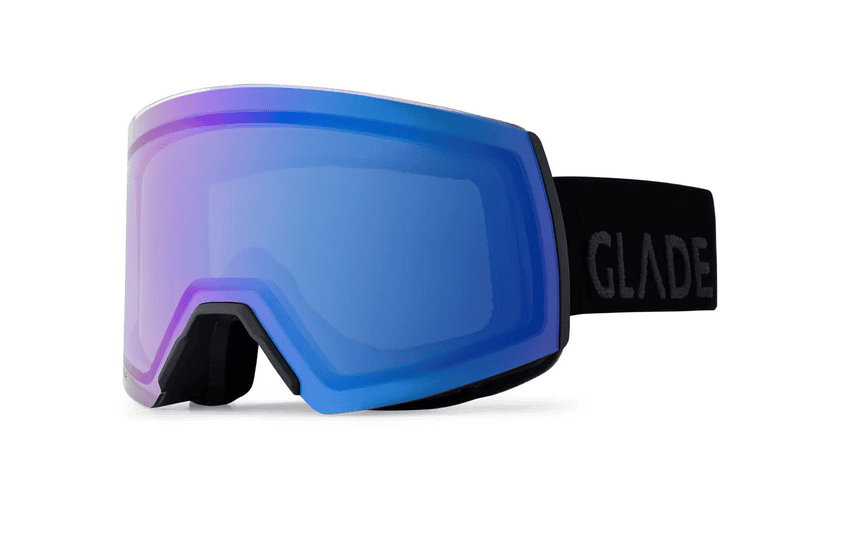

With big players like Anon (Burton), Smith, and Oakley dominating the goggle scene, it’s a tough place to break through. But that’s exactly what Glade has pulled off. The secret: quality builds with mass appeal at standout prices. Our current favorite from their four-goggle lineup is the Adapt 2 (and smaller 2S), which packs in a string of high-end features for a wallet-friendly $149. Design highlights include a clean, frameless shape, stout materials that are clearly made to last, and a competitive field of view for its medium/large size. Additionally, we think Glade nailed the essentials with comfy padding, excellent fog prevention, and a frame that paired well with a range of medium-sized helmets we tried.
We’ve had mixed experiences with photochromic lenses over the years: The adjustable tint can be slow to react to changing conditions, and they often run too dark. But Glade’s lens tech is the best we’ve used, with a super wide VLT range of 16 to 65% (for the Photochromic Green and Purple Mirror lenses) that excels even during heavy snowfall. In terms of optical quality, it may lack the HD-like effect of some of the premium options from Smith or Oakley, but it’s not far behind and roughly half the cost. Our only real nitpick is that Glade is a small brand, and availability can be hit or miss (we’ve already gotten a note from them to buy early this winter, as stock is expected to go quickly). But if you can score a pair and want a photochromic lens, the combination of price and performance is hard to beat.
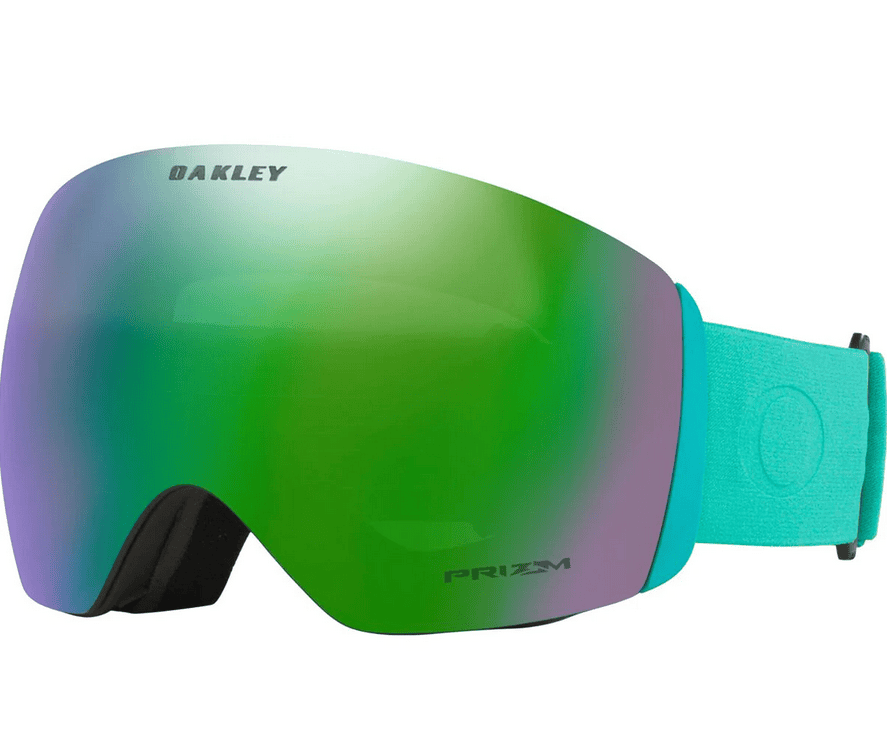

One of the more distinctive designs on the mountain, Oakley’s Flight Deck has been a long-time favorite thanks to its oversized, rimless style. The large spherical lens gives the goggle its signature look, and combined with a low-profile shape, you get one of the largest fields of view on the market (particularly at its price point). Compared with the Smith I/O Mag above, you see more of the mountain in all directions—up, down, and side-to-side. Tack on Oakley’s Prizm technology, which is neck and neck with Smith’s ChromaPop, and this is one impressive ski goggle.
The most notable downside is that the Flight Deck only comes with one lens (additional Flight Deck Prizm lenses start at $70). And should you invest in a second lens, the quick-change isn’t exactly quick by most people’s standards and less intuitive than modern options (we’ll admit to turning to YouTube for a tutorial). But this doesn’t detract from the excellent visibility, all-day comfort, and high-end build quality of the Flight Deck. For a similar all-around design but with a trimmed-down, medium/large fit, check out the Flight Deck M.
Goggles are an essential part of skiing or snowboarding gear to protect your eyes from the elements and injury. These sports expose your eyes to prolonged periods of harsh wind and bright sunlight. Unlike sunglasses, goggles seal your eyes from the cold air, and many goggles come with lenses that block UV light